
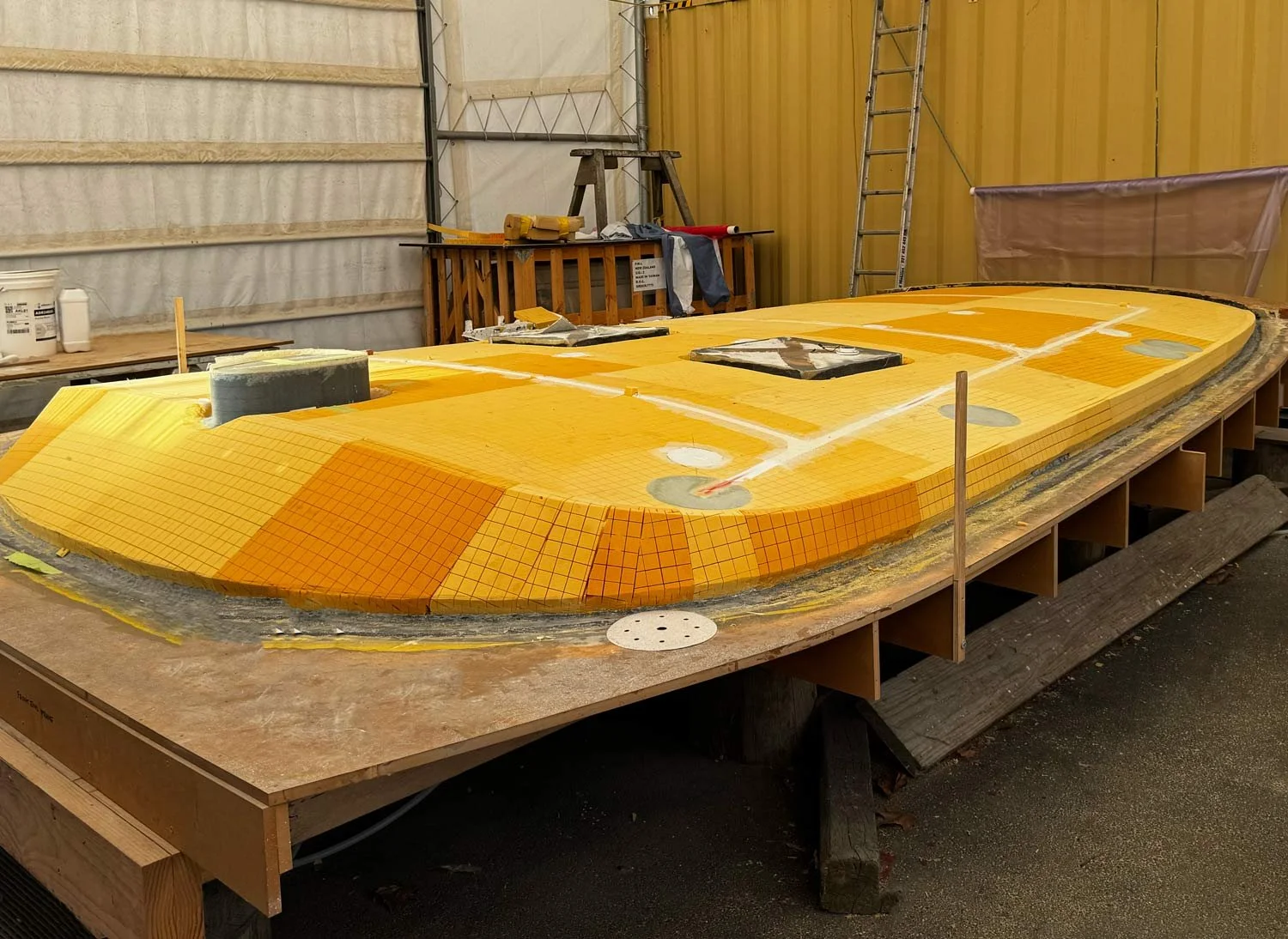
Composite Solutions for Modern Yachts, Launches, Catamarans, and Performance Boats
Modern boatbuilding relies heavily on composite materials to deliver incredible strength, durability, and efficiency. From standard production fibreglass hulls and blue-water cruising yachts to high-performance carbon fibre racing machines, composite construction is the literal foundation of modern marine design.
At Quayside Boatyard, we provide a complete range of composite services, including custom fabrication, structural modifications, and complex accident repairs for monohulls, multihulls, and cruising yachts. Whether you are addressing hidden stress damage, reinforcing a highly loaded deck area, or designing a bespoke component from scratch, our team blends deep traditional boatbuilding knowledge with advanced modern composite techniques to deliver permanent, structural solutions.
More Than Just Repairs: We Build Bespoke Solutions
Many yards can patch up a broken fibreglass panel, but at Quayside, we actually engineer and build new composite structures from the ground up.
Our team regularly fabricates one-off custom components to help boaties solve unique layout problems, improve structural functionality, and modernise older lines. If you are trying to source an obsolete factory part, altering a transom layout, or creating a completely new feature, we can design and manufacture a custom composite solution tailored exactly to your vessel's laminate schedule and intended use.
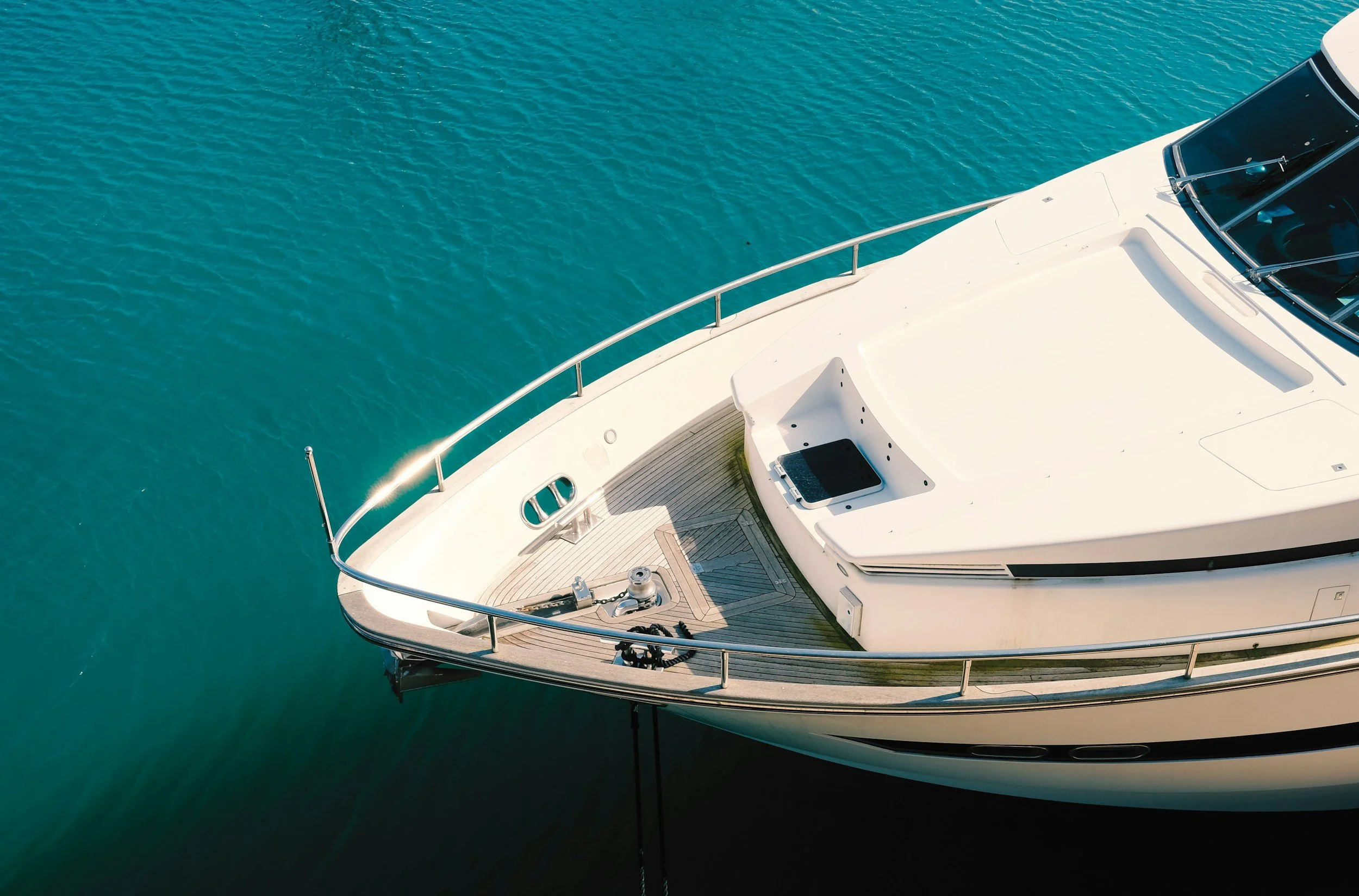
Our Marine Composite Services
-
Fibreglass remains the premier choice for the marine industry. We look after everything from basic cosmetics to heavy structural laminating:
Heavy structural fibreglass repair and tabbing
Gelcoat matching, chip repairs, and major surface profiling
Impact, grounding, and severe collision damage reconstruction
Osmosis stripping, structural drying, and vinyl-ester sealing
Custom mould-making and structural component fabrication
-
Carbon fibre provides exceptional strength-to-weight characteristics, making it essential for performance racing yachts, high-stress spar sections, and modern multihulls. We offer specialised care including:
Structural carbon fibre repairs and reinforcement sleeves
Fabrication of lightweight carbon components, chainplates, and rudders
High-load laminate tie-ins and structural engineering modifications
Precise wet layouts using premium epoxy resin systems
-
Not all composite structural failures are obvious on the surface. De-lamination, water-logged core materials, or failing internal bulkhead bonds can remain completely hidden beneath the gelcoat. Our team can thoroughly assess and rebuild your boat's inner framework:
Core sample analysis and moisture monitoring
Replacing rotten balsa or degraded foam core materials
Re-bonding detached bulkheads, stringers, and grid matrices
Ensuring structural continuity across major hull-to-deck joins
-
If a standard off-the-shelf part doesn't exist or doesn't fit your layout, we can build it manually using high-quality glass, carbon, and core arrays:
Custom companionway yacht hatches and heavy-duty deck lockers
Bespoke instrument pods, helm consoles, and dash layouts
Cockpit seating modifications and integrated bait stations
Vacuum-bagged panels, brackets, and structural hardtops
Tailored Material Engineering
Depending on the specific requirements of the job, we select and work with the exact resin and curing technology required to match your boat's original build:
-

Epoxy Systems:
For ultimate bond strength, water resistance, and carbon fibre integration.
-

Vinyl-ester Resins:
Excellent for structural repairs and providing a superior chemical moisture barrier against osmosis.
-

Polyester Systems:
Perfect for standard production boat matching and general repairs.
-

Core Technology:
Working with advanced foam cores, Honeycomb, and high-density inserts for high-load attachment points.
Why Choose Quayside for Composite Fabrication?
A Boatbuilder's Eye: Our background means we understand the underlying mechanical stresses of a vessel, ensuring our modifications never compromise your boat's overall safety.
Advanced Technical Skills: Highly experienced with vacuum-bagging and advanced laminate compaction to achieve optimal resin-to-glass ratios.
Full Service Hardstand: Your composite upgrades can be seamlessly scheduled alongside your annual haulout, antifouling, mechanical servicing, or electrical rewiring.
Handy Warkworth Location: A relaxed, focused yard north of Auckland that provides the perfect environment for clean, dust-controlled composite and gelcoat curing.
Advanced Multihull and Cruising Pedigree
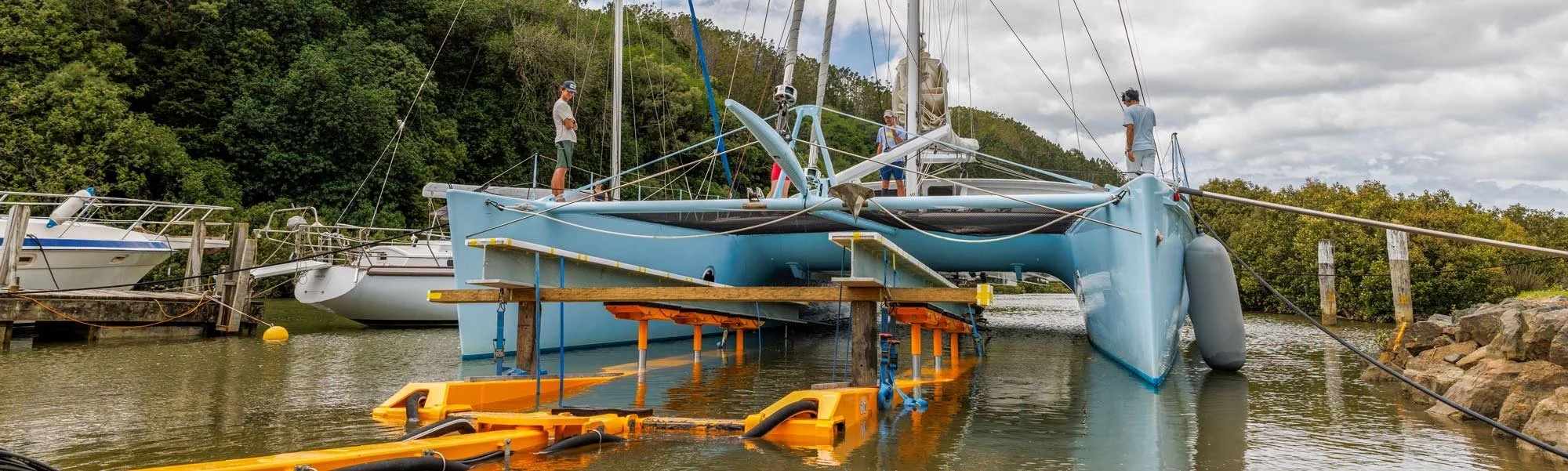
Advanced multihulls and blue-water cruising boats rely implicitly on composite engineering to remain light, stiff, and safe in big ocean swells. We are highly experienced in handling the sophisticated laminate schedules of production giants like Lagoon, Leopard, Fountaine Pajot, Outremer, and Catana, alongside performance designs from Schionning, Gunboat, Grainger, Roger Hill, and Chris White.
Whether it is vacuum-bagging a lightweight bulkhead modification or repairing deep impact damage on a performance daggerboard, we understand the exact chemical and physical demands placed on modern multihull structures.
Frequently Asked Questions
-
Standard fibreglass generally refers to basic chopped strand mat or woven glass cloth saturated with polyester resin, commonly found in mass-production boats. Advanced composites utilize high-strength fabrics like carbon fibre or Kevlar combined with high-performance epoxy resins and lightweight structural core materials, creating structures that are significantly lighter and stiffer than traditional solid fibreglass.
-
Yes, absolutely. Carbon fibre can be structurally repaired using specialised scarfing and layering techniques. We grind back the damaged area at a precise gradient to expose the individual fibre layers, then laminate new carbon plies into place using vacuum pressure to ensure the repaired zone completely matches the original strength profile.
-
Most modern composite decks and topsides use a sandwich construction method: two thin layers of fibreglass skin bonded over a thick, lightweight core material like balsa wood or foam. If water leaks through an unsealed deck fitting, the core can rot or delaminate over time, causing the deck to feel soft or spongy. Core replacement involves cutting away one skin layer, scraping out the damaged core, bonding in fresh marine foam, and glassing the skin back over.
-
Yes, this is the most practical way to handle it. Small glass repairs, gelcoat touch-ups, or minor modifications can easily be completed by our team while your vessel is dried out on the hardstand for its routine bottom paint and annual wash.
Planning a Custom Composite Project?
Whether you need to repair a structural collision scar, fabricate a lightweight hardtop, or modernise your deck configuration, the team at Quayside is ready to help turn your concepts into clean, durable reality.